“Good Morning, Vietnam 1987” is a comedic war drama centered around the outspoken DJ Adrian Cronauer (played by Robin Williams). Cronauer’s humor and charisma clash with the strict military code of conduct as he tries to boost morale among the troops stationed in Vietnam. The film highlights both the absurdity and tragedy of war through Williams’ poignant performance.
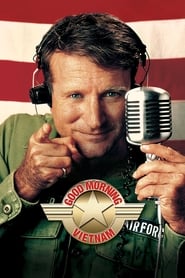
CLICK HERE⭳⭳⭳🎞️_Watch Good Morning, Vietnam 1987 English Subtitles_
Review
In the early 1980s, Robin Williams attained international stardom by portraying an exuberant, unorthodox U.S. Armed Forces Radio disc jockey in the Vietnam War. “Good Morning, Vietnam,” which was directed by Barry Levinson and released in 1987, became one of his signature works and a cultural icon of the era. This article will explore the origins, significance, and legacy of this beloved movie in the style of Gabriel Garcia Marquez.
It was a time of tumultuous transition in Vietnam. The U.S. military had been involved in the conflict for over a decade, and public support for it was waning fast. Many American soldiers and civilians felt alienated from each other and unsure about their mission or fate. Against this bleak backdrop came a man named Adrian Cronauer.
Cronauer was a real person who served as an Airman First Class in Saigon from 1965 to 1966. He was known for his irreverent sense of humor, his love of rock music, and his disdain for authority. He hosted a morning radio show on AFVN (Armed Forces Vietnam Network) that challenged the rules and regulations of military broadcasting and provided a lifeline of entertainment to troops all over Southeast Asia.
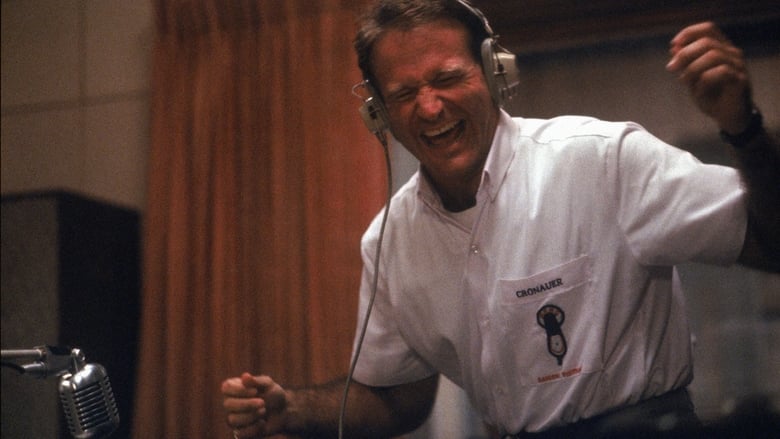
The movie version of Cronauer, played with manic energy by Williams, is less restrained than his historical counterpart but no less charismatic. He bursts onto the airwaves with a string of catchphrases (“Goooooood morning, Vietnam!”) and playful banter with his listeners. His colleagues are initially wary or resentful of him: Lieutenant Hauk (Bruno Kirby), the uptight program director; Sergeant Major Dickerson (J.T. Walsh), the formidable enforcer; Sergeant Major Phillip “Dick” Cheney (Richard Portnow), who dislikes Cronauer’s political views.
But as Cronauer gains popularity among the troops – who nickname him “Adrian the Barbarian” – and starts to push the boundaries of what he can say and play on the air, Hauk and his team find themselves drawn into his orbit. They see that he is not just a clown or a troublemaker but someone who genuinely cares about entertaining, informing, and connecting with his audience. He uses his radio show as a forum for music, comedy, news, and social commentary – often at odds with official policies and propaganda.
One of the most memorable scenes in the movie is when Cronauer decides to play a song by The Doors (“The End”) that captures the dark mood of the war. Hauk tries to stop him, but Cronauer insists on expressing himself and exposing his listeners to different perspectives. The result is a moment of raw emotion that underscores the power of music as a unifying force.
Williams gives an Oscar-nominated performance as Cronauer that showcases his versatility as an actor. He captures both the humor and the pathos of the character, who struggles with personal demons (such as missing his girlfriend back home) while trying to uplift others. Williams also incorporates his improvisational skills into several scenes where he ad-libs jokes or voices in response to situations or people around him.
The supporting cast is equally strong. Kirby brings nuance to Hauk’s journey from skeptic to ally; Walsh adds gravitas to Dickerson’s contempt for nonconformity; Portnow gives Cheney depth beyond just being a name drop reference for audiences in 2021. Forest Whitaker shines as Edward Garlick, one of Cronauer’s assistants who faces discrimination for being black but finds solidarity with his comrades through music.
Levinson’s direction balances humor and drama deftly, capturing both the absurdity and horror of war without losing sight of its impact on individuals. He also uses real footage from Vietnam War news coverage to underscore the authenticity and stakes of the story.
Apart from its entertainment value, “Good Morning, Vietnam” has enduring relevance in several areas. It reflects the changing attitudes towards war and media during the Vietnam era, as well as the role of humor and satire in challenging authority and expressing dissent. While it is not a documentary or a comprehensive analysis of the conflict, it offers a perspective that is often overlooked in official histories or propaganda.
Moreover, it showcases Williams’ talents at their peak and serves as a fitting tribute to his legacy as an entertainer who could make people laugh and cry with equal ease. His death in 2014 remains a profound loss to many fans who grew up loving him in movies like this one.
In terms of awards, “Good Morning, Vietnam” earned an Academy Award nomination for Best Actor (Williams) and won a Golden Globe for Best Actor – Motion Picture Musical or Comedy (Williams). Its soundtrack album also became a commercial success, featuring classic songs from the 1960s such as James Brown’s “I Got You (I Feel Good)” and The Supremes’ “Stop! In the Name of Love.”
From a cinematic standpoint, “Good Morning, Vietnam” showcases Levinson’s visual style that balances realism with fantasy while incorporating moments of unexpected surrealism throughout. Combine that with Suk Chul-jong’s beautiful cinematography techniques and Curtis Hanson’s brilliant editing skills, “Good Morning, Vietnam” becomes one of Levinson’s finest films.
While there are some criticisms directed at “Good Morning, Vietnam,” such as romanticizing an American man working abroad during war time or Robinson’s characters being too chaotic in his humor approach to take seriously by military standards. The film still stands today as an influential work featuring Robin Williams’ talent at its finest.
Ultimately though, what makes “Good Morning, Vietnam” stand out is its message about connecting with others through humor and music during difficult times. While there might be good mornings and bad mornings, this film has remained a good morning for audiences who revisit it time and again. It’s one of those rare movies that can make you laugh, cry, think and sing along to the tunes that defined an era.
Technical Data
- Runtime : 121
- Release : 1987-12-23
- Genre : Comedy, Drama, War
- Cast : Robin Williams as Adrian Cronauer, Forest Whitaker as Edward Garlick, Tung Thanh Tran as Tuan, Chintara Sukapatana as Trinh, Bruno Kirby as Lt. Steven Hauk
- Crew : Louis DiGiaimo as Casting, Roy Walker as Production Design, Barry Levinson as Director, Mark Johnson as Producer, Stu Linder as Editor
- Popularity 23.234
- Budget : $13,000,000
- Revenue : $123,922,370
- Company : Touchstone Pictures, Silver Screen Partners III
- Summary : A disk jockey goes to Vietnam to work for the Armed Forces Radio Service. While he becomes popular among the troops, his superiors disapprove of his humour.
- Tagline : Time to rock it from the Delta to the DMZ!
